
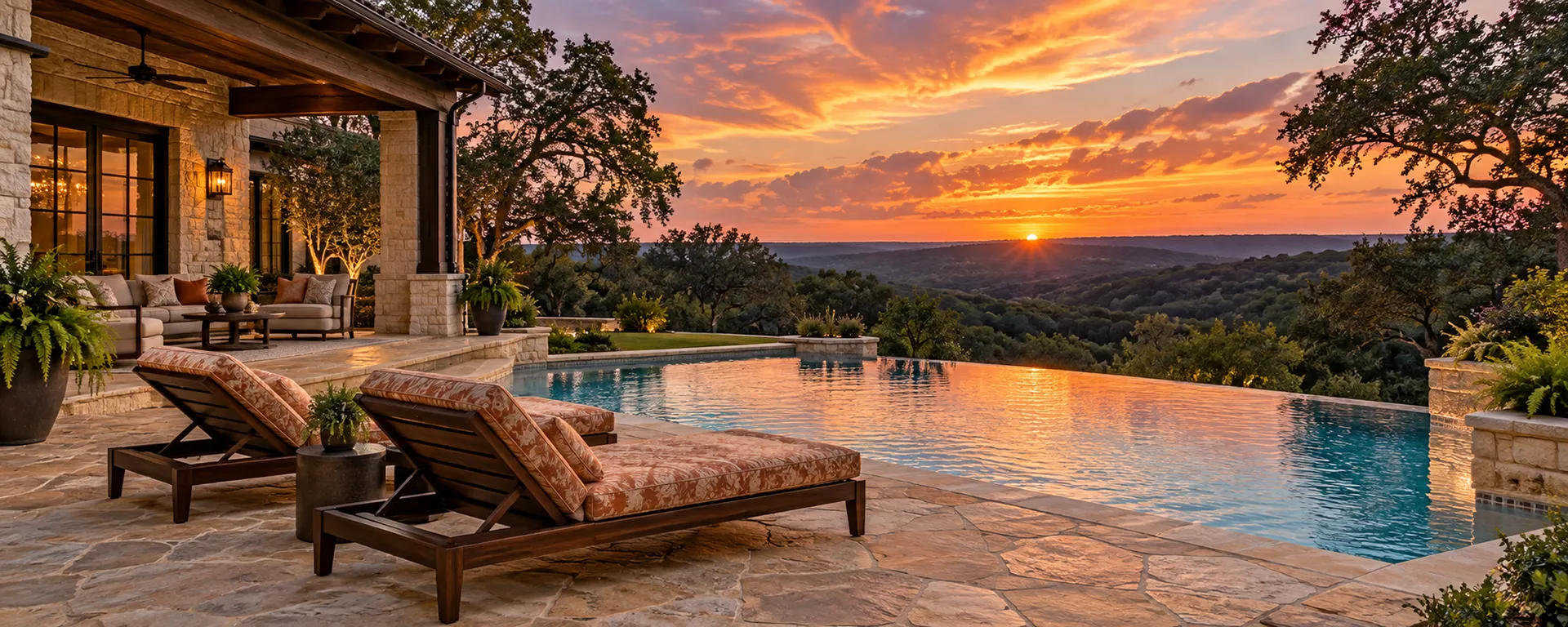
Not Just Another Pretty Face
A beautiful image can stop someone mid-scroll. Its greater value lies in what happens next.
Someone saves it. Shares it with a partner. Starts researching materials. Contacts a designer. Walks into a builder’s office and says, “I want something like this.”
Aspirational storytelling helps people recognize something they want for their own lives. It gives shape to possibilities they may not have known how to describe: a more welcoming home, a backyard that brings people together, or a destination that makes an ordinary weekend feel extraordinary.
For the brands and professionals capable of delivering those experiences, that desire creates a business opportunity.
From Admiration to Action
The connection between visual inspiration and purchasing behavior has measurable support.
In 2022, Google reported that 48% of shoppers had taken a screenshot of clothing, an accessory, or a home decor item they liked. Among that group, 70% said they subsequently searched for or bought it. Google had also reported in 2019 that 50% of online shoppers said product images inspired them to purchase.
These findings concern shopping broadly, rather than architectural commissions or construction contracts. But they document behavior familiar to anyone who has worked with a customer carrying a collection of inspiration images: visual discovery can prompt someone to pursue what they see.
In the built environment, an image can become the starting point for a substantial conversation. A prospective customer may arrive interested in a particular stone, a planting combination, or the atmosphere of an outdoor living space. The image gives the customer and the professional a shared reference from which to explore the possibilities.
The eventual result will respond to the site, budget, available products, and professional judgment. The image’s contribution is helping that conversation begin with a clearer sense of desire.
Helping People Imagine Their Own Experience
There is also research behind the idea that how a product is depicted influences someone’s interest in it.
In a peer-reviewed paper published in the *Journal of Consumer Research* in 2012, Ryan Elder and Aradhna Krishna reported four studies showing that product depictions facilitating imagined physical interaction increased purchase intentions. Their experiments examined product orientation, including its relationship to a viewer’s dominant hand. They did not test architectural storytelling, but they demonstrate that visual presentation can influence imagined use and purchasing interest.
Applied to AEC marketing, that offers a useful creative principle: help people understand what an offering could mean in their own experience.
A stone sample communicates color and texture. A thoughtfully composed environment helps someone imagine that stone surrounding a fireplace where the family gathers.
A pool photograph shows a place to swim. A complete outdoor setting introduces the possibility of shaded lunches, quiet mornings, and evenings spent outside with friends.
Architecture, materials, planting, lighting, and furnishings work together to make the experience imaginable. The customer begins to understand the value of the whole and the contribution of its individual parts.
When the Vision Grows, the Opportunity Can Grow
Customers do not always finish a project with the same priorities they had at the beginning.
The 2026 U.S. Houzz & Home Study surveyed 20,358 respondents, including 10,176 renovating U.S. homeowners. Among homeowners who exceeded their renovation budgets in 2025, 35% cited choosing more expensive products or materials than initially planned, while 31% cited changes to project scope or design.
These findings do not establish that marketing imagery caused higher spending. They do show that material choices and project scope can change as homeowners develop their plans.
Aspirational storytelling gives brands a way to participate earlier in that process by making relevant possibilities visible.
Someone considering a patio may discover the value of integrating shade, planting, lighting, and comfortable furnishings. A customer attracted to a stone exterior may consider carrying the material into an entry, fireplace, or garden wall. A developer may recognize how a cohesive landscape and amenity strategy could strengthen the experience of a property.
The purpose is to help customers recognize worthwhile possibilities and understand what it takes to achieve them. When that understanding supports a more complete project, it can create additional opportunities for the designers, builders, manufacturers, and suppliers involved.
Turning Production Efficiency Into Market Opportunity
Creating these environments traditionally requires access to something suitable to photograph.
That can mean waiting for construction to finish, landscaping to establish, a property to become available, or weather and production schedules to align. Travel, styling, photography, and coordination can also make frequent production expensive.
A hybrid creative approach combining experienced art direction, traditional design, and carefully and meticulously managed AI production can reduce those constraints.
There are documented examples of significant production gains. In March 2024, IBM Consulting’s global chief design officer told Reuters that an end-to-end creative cycle previously taking two weeks had been reduced to two days through the use of Adobe’s generative AI tools for ideation and campaign variations.
Klarna also reported saving $1.5 million on image production in the first quarter of 2024 while shortening its image-development cycle from six weeks to seven days, according to *The Wall Street Journal*. Those figures are company-reported results from its own marketing operation.
Neither example establishes a universal production benchmark, particularly for detailed architectural environments. Both illustrate how AI-assisted workflows can change the economics and timing of bringing creative work to market.
For AEC brands, that flexibility can make it practical to show a material across several architectural settings, explore an outdoor living concept, or communicate a landscape’s intended maturity before a suitable completed project is available.
How Efficiency Supports Growth
The commercial advantage extends beyond saving money on an image.
Shorter production timelines allow a brand to introduce ideas sooner. More flexible production supports additional applications, audiences, and campaigns. Savings can help fund the advertising and distribution needed to put that work in front of prospective customers.
Together, those advantages create more opportunities to generate interest, learn which ideas resonate, and begin qualified sales conversations.
Revenue still depends on the offering, the audience, the sales process, and the ability to deliver. Faster production creates capacity to pursue growth. Compelling storytelling gives that capacity a purpose by helping customers see something worth pursuing.
Access to AI Is Only the Beginning
With these tools readily available, a fair question follows: Why not create the environments in-house?
Access makes image generation possible. The commercial usefulness of the result depends on the decisions behind it.
Will Mokry Creative brings two decades of AEC marketing experience to that process. Before adding AI to its production suite, WMC spent three intensive years researching, testing, and evaluating the technology, learning where it performs, where it fails, and what it takes to produce work worthy of a client’s brand.
That experience informs the creative direction, the selection of settings, the representation of materials, and the relationships between architecture, landscape, and furnishings. It also informs what gets rejected.
Distorted construction, inconsistent materials, implausible planting, and unresolved details can undermine the credibility of an otherwise compelling environment. Correcting those problems requires the ability to recognize them and the discipline to continue refining the work.
Every environment undergoes scrutiny for its creative purpose, visual integrity, and faithful representation of the client’s offering. Conceptual environments must also be identified honestly as visualizations when they do not depict completed work.
WMC releases work only when it meets its highest quality standards. If it does not meet that standard, it does not ship. Period.
Giving Desire Somewhere to Go
The evidence supports a clear argument. Visual inspiration can prompt purchasing activity. How products are depicted can influence purchase intentions. AI-assisted production can shorten creative timelines and reduce costs.
The opportunity for AEC brands is to bring those capabilities together with industry knowledge, creative judgment, and credible execution.
An environment becomes commercially useful when it helps someone understand what is possible, recognize why it matters, and take a step toward creating it.
The beautiful image opens the door. The life someone imagines within it gives them a reason to walk through.